

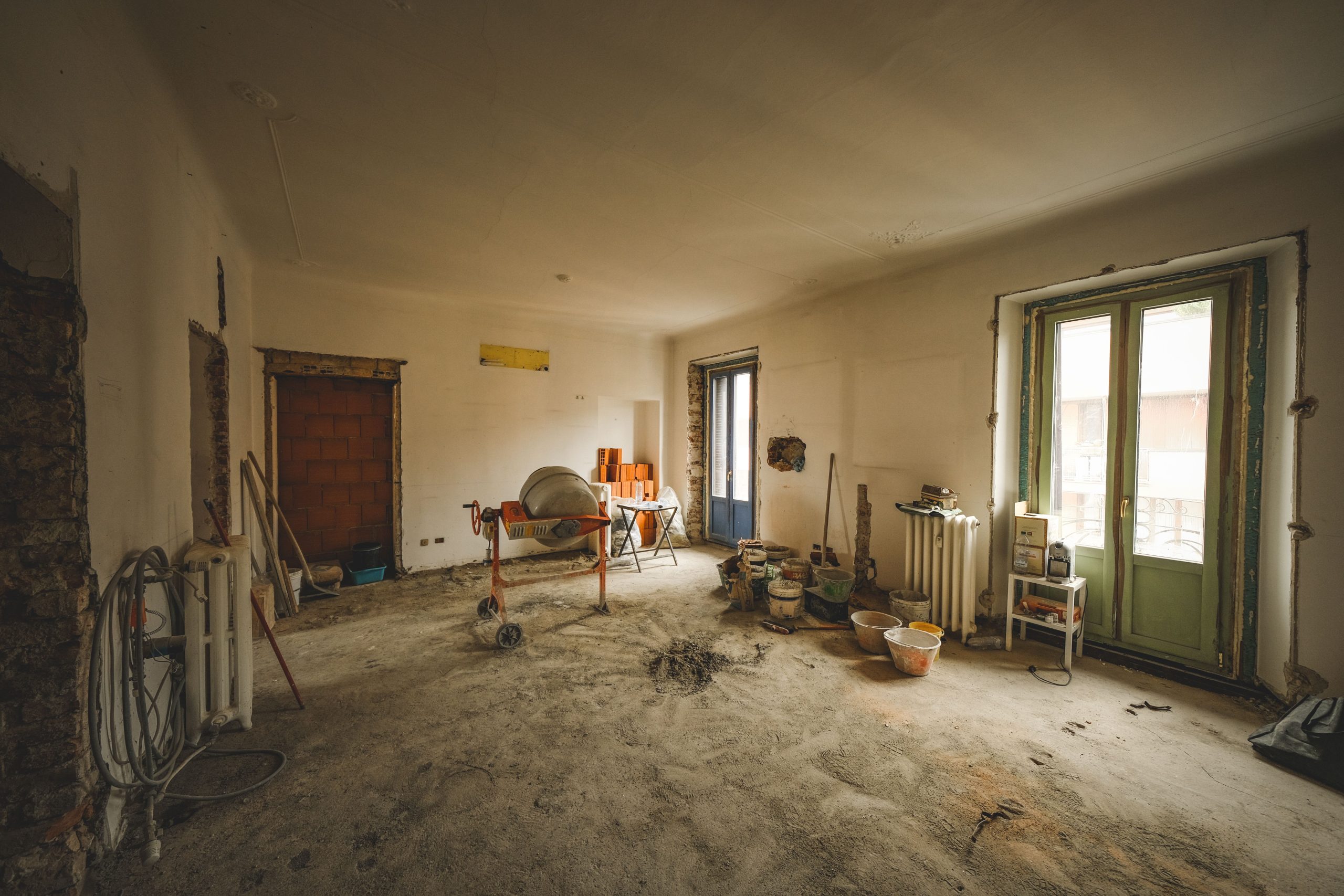

The last trade has packed up, the skip has gone, and every surface wears the same grey film. The clean-up happens in a set order, and knowing the post construction cleaning stages saves you paying for the same clean twice.
Quick answer: Post-construction cleaning happens in three stages: a rough clean (debris and coverings cleared once the messy trades finish), a builders clean (a top-to-bottom deep clean of dust and residues), and a sparkle clean, the final streak-free polish just before handover. Most projects need at least the last two.
What Is Post-Construction Cleaning?
Post-construction cleaning is the specialist clean that takes a building from “trades just left” to handover-ready. It covers what a build leaves behind: fine plaster dust, paint splashes, adhesive, grout haze and the protective film stuck to new windows and appliances.
It’s a different job from domestic cleaning. Plaster and silica dust is so fine it hangs in the air and resettles on surfaces you wiped an hour ago, and it keeps doing that for days. The residues differ too: a regular cleaner lifts grime and limescale, while a post-build team scrapes paint off glass and dissolves adhesive without scratching what’s underneath.
That’s also why it’s staged. One clean at the end would mean deep cleaning while dust still settles and snagging trades walk through, so each stage is timed to the state of the site.
The Three Stages, in Build Order
The stages follow the build itself. First fix puts in the wiring and pipework, plastering covers it, second fix adds the sockets and fittings, then decorating finishes the surfaces. The rough clean lands once the messy structural work ends, the builders clean follows decorating, and the sparkle clean comes after snagging.
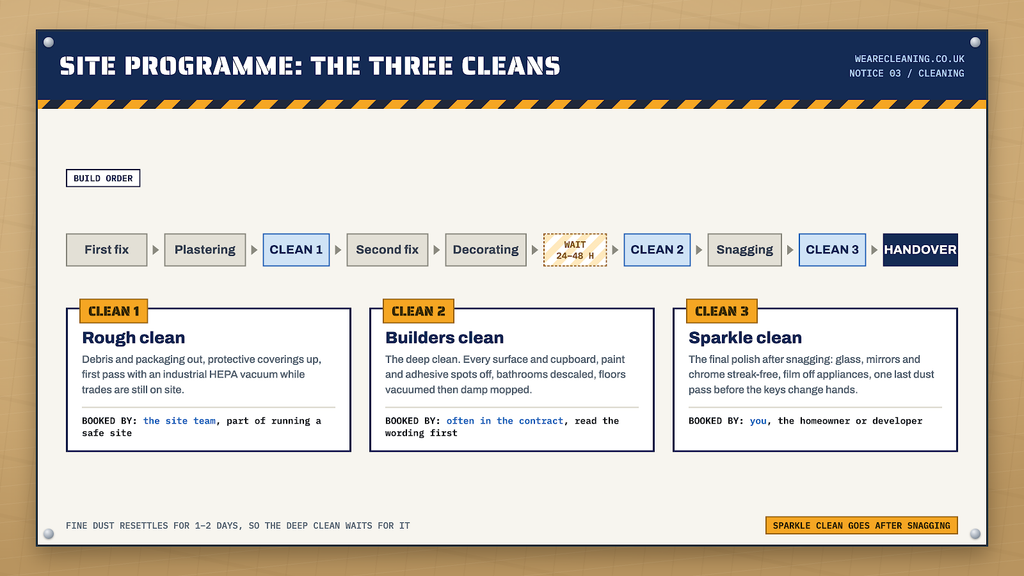
Post-construction cleaning – three stages mapped to the build timeline
Stage 1: The Rough Clean
When it happens: Once the heavy, messy work is done, usually after first fix and plastering, while trades are still on site.
What’s done: Debris and offcuts cleared, packaging bagged up, protective coverings lifted, and a first pass with an industrial HEPA vacuum before the worst of the dust gets walked through every room.
What it’s not: A finished clean. Surfaces stay dusty while trades are still working.
Stage 2: The Builders Clean
When it happens: After second fix and decorating, with the trades’ main work complete.
What’s done: The deep clean. Dust lifted from every surface, including inside cupboards and wardrobes, paint and adhesive spots removed, windows cleaned, bathrooms descaled, and floors done in two passes: a thorough vacuum, then a damp mop.
What it’s not: The final presentation clean. Dust is still settling, and snagging trades will leave fresh marks.
Stage 3: The Sparkle Clean
When it happens: After snagging is signed off, as close to handover as possible.
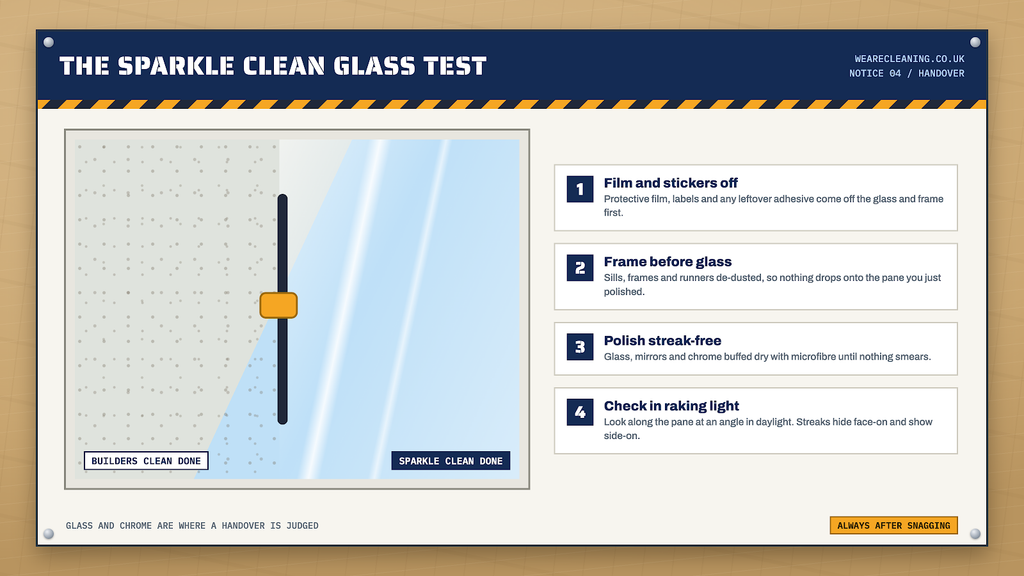
What’s done: The detail polish. Glass, mirrors and chrome buffed streak-free, a final dust pass over every surface, film off the appliances, so the property feels new on day one.
What it’s not: A deep clean. It assumes the builders clean did the heavy lifting; it polishes, it doesn’t excavate.
Builders Clean vs Sparkle Clean: What’s the Difference?
A builders clean is the deep clean that removes construction dust and residues from the whole property, while a sparkle clean is the light final polish just before handover. The builders clean does the heavy work; the sparkle clean perfects it once the snag list is closed.
| Rough clean | Builders clean | Sparkle clean | |
|---|---|---|---|
| Timing | During the build, after the messy trades | After second fix and decorating | After snagging, just before handover |
| Scope | Debris, coverings, first vacuum pass | Every surface, cupboard, window and floor | Glass, chrome, final dust pass, presentation detail |
| Finish level | Safe and clear, still dusty | Clean, with fine dust still settling | Streak-free and handover-ready |
| Typical length | Shortest, often done by the site team | The longest visit of the three | A few hours of detail work |
The two stages are priced differently too, so check what an after builders clean costs before agreeing who covers which visit. A sparkle clean also goes by builders’ sparkle or handover clean.
Who Books Each Stage: The Builder or You?
On most projects, the main contractor carries the rough clean, since clearing debris is part of running a safe site. The builder’s clean is often written into the contract too, but read the wording before you rely on it. A “builder’s clean” done by the trades themselves can mean a sweep and a quick vacuum, a long way from the deep clean the name suggests.
The sparkle clean is the one homeowners and developers usually book directly, because it has to land after snagging. Book it earlier, and the snag fixes undo it: a plumber resealing a shower leaves silicone smears on tiles you’ve paid to polish.
So in practice: the builder clears the site, the contract may cover the deep clean, and you book the final polish. If the contract is silent on cleaning, settle who pays for the builders clean before the final invoice lands.
When to Book, and Why You Wait 24 to 48 Hours
Fine construction dust takes a day or two to settle after the trades finish, so booking the builders clean for the same afternoon means paying for surfaces that look dusty again by morning. Waiting 24 to 48 hours lets the air clear so the clean holds.
Renovators on Mumsnet back this up from hard experience: posters on the Refurbishment Dust thread describe builders’ dust reappearing for weeks after the work ends. The deep clean waits for the settling window, and the sparkle clean mops up the stragglers.
Timing varies a little by project. On a new build, each plot gets its builders clean after decorating and a sparkle clean timed to its handover date. On an extension, dust travels well beyond the new room, so the clean should too. On a commercial fit-out, the sparkle clean doubles as the deep clean before regular office cleaning begins, and a refurb between tenancies ends with an end of tenancy cleaning instead, since the next check-in sets the standard.
After Builders Cleaning Checklist, Room by Room
Use this as the scope for a builders clean, whoever does it. Work top to bottom, because dust knocked off a cupboard top lands on a floor you haven’t done yet.
| Room | What gets done |
|---|---|
| Kitchen | Cupboards cleaned inside and out, worktops and splashback de-dusted and wiped, appliances unwrapped and cleaned, sink and taps descaled and polished |
| Bathrooms | Tiles and sanitaryware washed and descaled, grout haze removed, silicone smears lifted, mirrors and glass polished, extractor dusted |
| Living rooms and bedrooms | Every surface dusted including door tops and architraves, skirting boards wiped, sockets and switches cleaned, cupboard and wardrobe interiors done |
| Windows | Stickers and protective film removed, glass cleaned inside, sills and surrounds wiped and corners de-dusted |
| Floors | Vacuumed with an industrial machine, then damp mopped; paint and plaster spots scraped carefully first |
| Outside areas | Thresholds and entrances swept, external doors wiped, packaging and debris cleared to the agreed point |
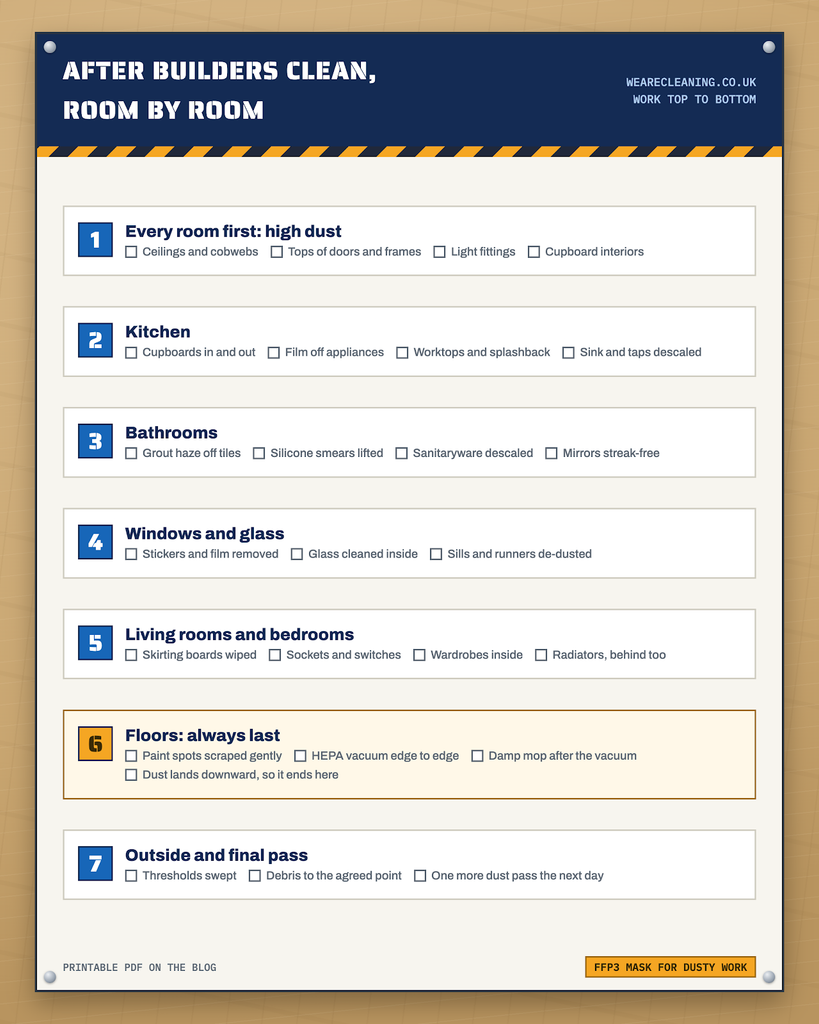
A printable one-page PDF of this checklist comes free with this post, tick boxes included.
Dust, Equipment and Safety
Household vacuums struggle with construction dust. The particles pass straight through a standard filter and back into the room, and the gritty mix wears the motor; Mumsnet renovators regularly report builders’ dust finishing off a domestic vacuum. A post-build team uses industrial HEPA-filtered machines that trap fine dust, plus plastic scrapers and microfibre cloths that lift residue without scratching.
The safety side is worth taking seriously. The Health and Safety Executive’s construction dust guidance says regularly breathing construction dust can cause lung cancer, asthma, COPD and silicosis, and it believes over 500 construction workers die from past silica dust exposure every year. Kevin Bampton, chief executive of the British Occupational Hygiene Society, told the British Safety Council’s Safety Management in May 2025 that silica dust is “respirable in the sense it’s small enough to go deep into your lungs”. If you’re doing a dusty clean-up yourself, an FFP3 mask is the minimum anywhere plaster, brick or tile has been cut.
DIY or Professional?
A single decorated room is a realistic DIY job. Give the dust a day to settle, follow the checklist above, and rinse your cloths constantly.
A whole property is a different animal. Post-plaster dust through every room, film on every window and a handover date that won’t move is professional territory: an insured team with industrial kit gets it done in one visit. Before you commit a weekend to it, compare DIY and professional after builders cleaning costs and count your own hours in that sum.
After Builders Cleaning in Dartford, Kent and South East London
We Are Cleaning handles after builders cleaning across Dartford, the DA1 and DA2 areas, and the rest of North Kent and London, from our base at Admirals Park, Crossways. We work with homeowners finishing a renovation, builders getting a plot buyer-ready, and developers running several handovers at once.
We work to handover dates, evenings and weekends included, and we bring every product and piece of equipment. The team is fully insured, and sparkle cleans for new-build plots and refurbs are timed to land after snagging, so the finish you pay for is the finish the buyer sees.
Get a quote through the form, or call 01322 250 632 and tell us where the project is up to; we’ll tell you which stage it needs.
FAQs
What Are the Steps Involved in a Post-Construction Cleaning Checklist?
Work through each room top to bottom: dust every surface, including cupboard interiors, remove paint, adhesive and film, clean the windows, descale bathrooms, then vacuum with a HEPA machine and damp mop last. Finish with a detail pass on glass and chrome.
Is a Sparkle Clean the Same as a Deep Clean?
No. A deep clean is the heavy, thorough stage, which on a building project is the builders clean. A sparkle clean is the light presentation polish that follows it: streak-free glass, chrome and a final dust pass just before handover.
How Much Does a Post Build Clean Cost?
It depends on property size, the state the trades left it in, and which stage you’re booking; the full after builders cleaning cost breakdown shows what to budget by hourly rate, property size and job type.
How Long After Builders Finish Should You Wait to Clean?
Wait 24 to 48 hours before the builders clean. Fine plaster dust stays airborne for a day or two, so a same-day clean gets undone as it resettles overnight. The sparkle clean then catches anything that drifts down later.
What Do I Need for Post Construction Cleaning?
A HEPA-filtered vacuum, microfibre cloths, a plastic scraper for paint and plaster spots, a bucket for damp mopping, and an FFP3 mask if the job involved cutting plaster, brick or tile. A household vacuum clogs quickly on fine dust and can be damaged by it.
What Does a Builders Clean Include?
A builders clean covers dust removal from every surface, including inside cupboards, paint and adhesive spots, window cleaning, bathroom descaling, and floors vacuumed then damp mopped across the whole property. It follows second fix and decorating, and it’s the most thorough stage.
What Is the 5 5 5 Rule for Cleaning?
There’s no official definition. It’s a household tidying habit with two circulating versions: five minutes each on decluttering, wiping and tidying, or five items binned, five donated, five put away per room. Fine dust defeats quick-burst cleaning, so a building project needs the staged approach.


